
Related Blogs


Understanding the Role of Skin Thickness in Rhinoplasty Results
9 minutes, 34 seconds
-5 Views 0 Comments 1 Like 0 Reviews
Rhinoplasty involves reshaping the underlying structures of the nose to improve its appearance, function, or both. However, the final result depends on more than bone and cartilage. The skin covering these structures also plays an important role in how nasal contours appear after surgery. Rhinoplasty in Riyadh (عملية تجميل الانف في الرياض) may be an option for people who want to refine their nose shape, but understanding skin thickness helps establish realistic expectations about the results. Thick and thin nasal skin can respond differently during healing, influencing definition, swelling, and the visibility of structural changes.
How Nasal Skin Affects Surgical Outcomes
Nasal skin forms the outer layer of the nose and covers the cartilage, bone, and supporting soft tissue. Its thickness, elasticity, and oil-gland activity can influence how clearly the underlying nasal framework is reflected in the final appearance.
When skin is relatively thin, small irregularities in the underlying structure may be more visible. When skin is thicker, it may soften the appearance of refined contours, especially around the nasal tip. Surgeons therefore evaluate the skin alongside the underlying anatomy when deciding which adjustments may be appropriate.
Skin thickness does not determine the outcome on its own. Cartilage strength, nasal shape, surgical technique, individual healing, and postoperative care also influence the result.
Understanding Thin Nasal Skin
Greater Visibility of Nasal Contours
Thin nasal skin may reveal changes in the underlying cartilage and bone more clearly. This can help make certain refinements visible, but it also means minor irregularities may be easier to notice. Surgeons must plan carefully to create smooth transitions and avoid unwanted edges or unevenness.
The Importance of Structural Precision
Because thin skin offers less coverage, the shape of the underlying nasal framework can have a noticeable effect on the external appearance. Surgical planning may focus on achieving precise contours while maintaining adequate support. The aim is to improve the nose's shape without creating excessive sharpness or visible irregularities.
Healing Considerations
Swelling and minor contour changes may be more noticeable when the skin provides limited coverage. Patients with thin skin should understand that the final appearance depends on both the surgical adjustments and the healing process. Follow-up appointments help the surgeon monitor recovery and assess any concerns.
Understanding Thick Nasal Skin
A Softer Appearance of Nasal Definition
Thicker skin can create a fuller appearance, particularly around the nasal tip. Even when the underlying cartilage has been reshaped, the skin may not reveal every detail of that change. This can influence how much definition is realistically achievable.
The Role of Cartilage Support
When nasal skin is thick, surgeons may consider the strength and shape of the supporting cartilage carefully. In selected cases, improving the framework's support can help the nose maintain its shape beneath the skin. However, techniques must be tailored to the patient's anatomy, and excessive alteration may create an unnatural appearance or compromise support.
Longer-Lasting Swelling
Thicker skin, especially around the tip, may be associated with swelling that takes longer to settle. The nose can look fuller during the early stages of recovery, and visible refinement may develop gradually over many months. Patients should avoid judging the final outcome too soon and follow their surgeon's recovery guidance.
How Surgeons Evaluate Nasal Skin Thickness
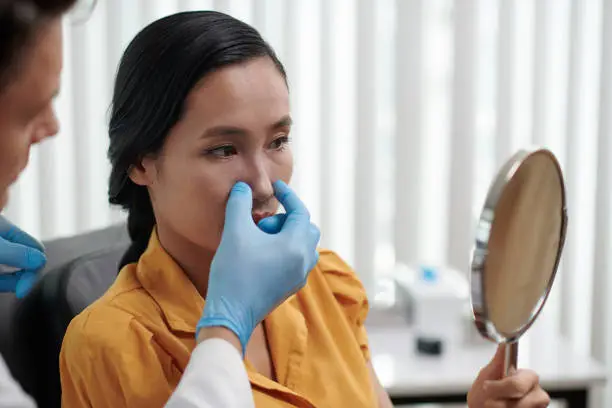
A preoperative assessment usually includes examining the nose from multiple angles and evaluating the skin's thickness, elasticity, texture, and oiliness. The surgeon also considers the nasal tip, bridge, cartilage strength, bone structure, and any existing asymmetry.
The assessment may include a discussion of previous nasal surgery, injuries, skin conditions, and the patient's main aesthetic concerns. These details help determine whether the requested changes are realistic and which approach may be most suitable.
Photographs can document the existing nasal shape and support conversations about expected outcomes. Digital simulations may help illustrate aesthetic preferences, but they cannot guarantee an exact surgical result.
Adapting Rhinoplasty Techniques to Skin Type
The surgical plan should reflect both the skin and the underlying nasal framework. For thin skin, the surgeon may focus on creating smooth, carefully controlled contours to reduce the visibility of irregularities. For thick skin, attention may be given to supporting the nasal tip and shaping the underlying structure in a way that accounts for the skin's coverage.
The appropriate approach depends on the specific concern and may involve open or closed rhinoplasty. Open rhinoplasty uses an incision across the columella, while closed rhinoplasty uses incisions inside the nostrils. Neither approach is automatically better for every skin type. The surgeon should explain the benefits, limitations, and risks of the recommended technique.
Skin Thickness and Rhinoplasty Recovery
Recovery varies from one patient to another. Swelling, bruising, congestion, and tenderness are common after surgery, while the nasal tip may take longer to settle than other areas. Skin thickness can influence how quickly the contours become visible, but it cannot predict the entire healing process.
Patients should follow instructions about cleaning, activity restrictions, protecting the nose from impact, and attending follow-up visits. They should also contact their surgical team if they experience unexpected symptoms or have concerns about recovery. Patience is important because the nose may continue to change subtly for a year or longer.
Setting Realistic Expectations for Rhinoplasty
A successful treatment plan considers what can be achieved safely with the patient's anatomy. Thin skin may make small structural details more apparent, while thick skin may soften the visibility of fine definition. Neither type automatically prevents a satisfactory result, but each presents different planning considerations.
Patients should discuss their goals openly and understand that a photograph of another person's nose may not be a realistic model for their own outcome. The surgeon can explain which changes may be achievable, what limitations exist, and how the procedure could affect nasal breathing and facial proportions. Rhinoplasty should be approached as an individualized surgical decision rather than a promise of perfection.
Book a Consultation at Royal Clinic Saudi
If you are considering nose reshaping, Royal Clinic Saudi (عيادات رويال كلينك) can be a starting point for discussing how your nasal skin and underlying structure may influence treatment planning. A consultation allows you to explain your concerns, review suitable options, and understand the possible outcomes and limitations. An individualized assessment helps you make an informed decision based on your anatomy and expectations.
FAQs:
1. Does thick nasal skin prevent good rhinoplasty results?
No. Thick skin can limit visible definition, but an appropriate surgical plan may still achieve meaningful improvements.
2. Is thin nasal skin better for rhinoplasty?
Not necessarily. Thin skin may reveal contours clearly but can also make small irregularities more noticeable.
3. Does skin thickness affect rhinoplasty recovery time?
It can influence how quickly swelling settles and definition becomes visible, particularly around the nasal tip.
4. Can a surgeon change the thickness of nasal skin during rhinoplasty?
Rhinoplasty mainly reshapes the underlying nasal structures. Skin thickness is generally an anatomical characteristic considered during planning rather than something routinely changed by the procedure.
تجميل الأنف في الرياض كم سعر عملية تجميل الأنف في السعودية عملية تجميل الانف في الرياض

Photos


Share this page with your family and friends.