
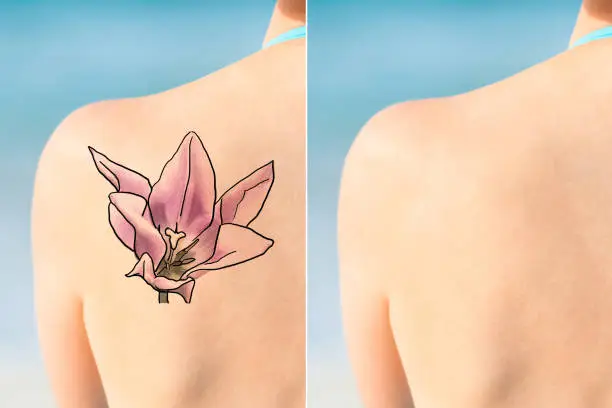
If you're considering laser tattoo removal, the first question is almost always the same: will it remove my tattoo completely? It's a fair question—and one that deserves an honest answer rather than a sales pitch. Laser tattoo removal in Riyadh The truth is that complete removal is possible for many tattoos, but it isn't guaranteed for all of them. Ink color, depth, age, skin type, and the technology used all influence how much ink the body can clear. This guide explains what "complete removal" really means, what factors affect it, and how to set expectations that match reality.
What "Complete Removal" Actually Means
Complete removal means the tattoo is no longer visible—no residual ink, no ghosting, no outline. For some tattoos, this is achievable. For others, significant fading is the realistic outcome, with faint remnants that may be barely noticeable but not entirely gone. Providers sometimes distinguish between "complete clearance" and "clinical resolution" (fading sufficient that the tattoo is no longer identifiable). Understanding this distinction upfront prevents disappointment and helps you evaluate what your provider is actually promising.
Which Tattoos Clear Most Reliably?
Some tattoos respond exceptionally well to laser treatment. Black and dark blue inks absorb laser wavelengths effectively and typically clear fastest. Older tattoos fade more readily because ink has already broken down naturally. Small, simple designs with uniform ink density are generally easier to clear than large, densely packed pieces. Tattoos on areas with good circulation—arms, torso—tend to respond better than those on extremities. If your tattoo fits these characteristics, complete removal is more likely.
Which Tattoos May Not Clear Fully?
Certain factors make complete removal less predictable. Greens, yellows, and light blues resist most laser wavelengths and often leave remnants. Some pigments contain metals or additives that complicate breakdown. Very deep ink, dense professional work, and tattoos over scar tissue may not clear entirely. Certain skin types carry pigmentation risks that limit how aggressively treatment can be pursued. None of these factors makes removal impossible—they make complete clearance uncertain, which is why honest estimates matter.
The Role of Technology
Laser technology significantly influences outcomes. Q-switched lasers have long been used for tattoo removal, but picosecond lasers—with shorter pulse durations—can break ink into smaller particles more efficiently, often improving clearance rates and reducing the number of sessions needed. Different wavelengths target different ink colors: 1064nm for dark inks, 532nm for reds and warmer tones. A provider using appropriate technology for your specific ink colors improves the odds of complete removal. Ask which devices they use and why.
How Many Sessions Are Needed?
Session counts vary widely—typically five to ten for many tattoos, though stubborn colors or dense ink may require more. Complete removal often requires more sessions than significant fading. Spacing sessions six to eight weeks apart allows the immune system to clear fragmented ink between treatments. Providers who promise complete removal in a fixed, low number of sessions for any tattoo are overselling. Honest practitioners give ranges, explain variability, and adjust estimates as your tattoo responds.
What Affects Your Individual Outcome
Beyond the tattoo itself, your body matters. Immune function influences how efficiently fragmented ink is cleared; sleep, stress, hydration, and overall health play roles. Skin type affects which lasers are safe and how aggressively treatment can proceed. Age influences healing. Genetics may affect how your skin responds to laser energy. These variables mean two people with similar tattoos can have different outcomes—which is why personalized assessment matters more than general promises.
When Complete Removal Isn't the Goal
Many people pursue laser removal not for complete clearance but for fading sufficient to allow a cover-up tattoo, or to make a tattoo less noticeable. If your goal is a cover-up or significant lightening rather than perfect clearance, the process becomes more predictable and often requires fewer sessions. Discuss your actual goal during consultation—complete removal, cover-up preparation, or aesthetic improvement—because the plan should match the destination, not an abstract ideal.
Questions to Ask During Consultation
Ask directly: Is complete removal realistic for my tattoo, given its colors, depth, and age? What percentage of fading can we expect per session? Which technology and wavelengths will you use, and why? How many sessions might complete removal require, and how will estimates evolve? What are the risks for my skin type? Specific, honest answers—including acknowledgment of uncertainty—indicate a provider worth trusting. Guarantees should raise suspicion.
When to Seek Professional Guidance
If you want an honest assessment of whether your tattoo can be fully removed, professional evaluation is essential. A consultation can evaluate ink characteristics, skin type, and technology options to provide realistic expectations. For personalized guidance on laser tattoo removal, a consultation with qualified professionals offers clarity rather than promises.
Final Thoughts: Honest Expectations, Better Outcomes
Can laser tattoo removal remove a tattoo completely? Sometimes yes, sometimes significantly but not entirely—and the difference depends on factors you can assess before starting. Black inks, older tattoos, and simpler designs clear most reliably; stubborn colors and dense ink may leave remnants. Choose providers who discuss this honestly, use appropriate technology, and set realistic expectations. Complete removal is possible—but informed expectations are what make the journey worthwhile.
Book an Appointment Consultation Clinic
For those seeking expert guidance and customized aesthetic care, you can book an appointment consultation at the Enfield Royal Riyadh.
FAQs
Can laser tattoo removal remove a tattoo 100%?
Often yes for responsive inks like black, but stubborn colors and dense ink may leave faint remnants—honest estimates matter.
Which tattoos are hardest to remove completely?
Green, yellow, and light blue inks resist lasers most; deep or densely packed tattoos also clear less predictably.
How many sessions does complete removal take?
Typically five to ten or more, depending on ink colors, depth, age, and skin type.
Does picosecond laser improve complete removal odds?
Yes—shorter pulses break ink more efficiently, often improving clearance and reducing session counts.
What if my tattoo can't be fully removed?
Significant fading is often achievable, enabling cover-ups or reducing visibility—discuss realistic goals during consultation.


Share this page with your family and friends.