Related Blogs


How Skin Type and Fat Distribution Affect Fat Melting Injections
11 minutes, 47 seconds
-8 Views 0 Comments 0 Likes 0 Reviews
Body contouring treatments can produce different results depending on a person's skin condition, fat distribution, and natural body structure. Although some people have small pockets of fat that remain noticeable despite maintaining a stable weight, others may experience fullness because of loose skin or differences in muscle structure. Understanding these factors is important when considering Fat melting injections in Riyadh as a potential option for localized fat reduction.
Fat-melting injections are designed to target specific fat deposits using substances that damage fat cells, allowing the body to process the affected cells over time. However, not everyone is a suitable candidate, and results cannot be guaranteed. Skin elasticity, the thickness and location of fat, and individual healing responses may influence the final appearance. A professional assessment helps determine whether injections are appropriate or whether another treatment may better address the concern.
How Skin Elasticity Influences Treatment Outcomes
Skin elasticity refers to the skin's ability to stretch and return toward its original shape. This characteristic is important in body contouring because reducing the volume beneath the skin does not automatically make the skin tighter.
People with relatively firm, elastic skin may experience a smoother-looking contour after successful localized fat reduction. When the skin adapts well to changes in underlying volume, the treated area may appear more defined. Nevertheless, good skin elasticity does not guarantee a particular result.
In contrast, people with loose or less elastic skin may notice that the skin does not conform closely to the reduced volume. This can be more noticeable after significant weight changes, with aging, or in areas where the skin has stretched over time. In these situations, fat-melting injections may not address the main concern because they target fat rather than directly treating excess skin.
A qualified clinician should assess skin quality before recommending treatment. If skin laxity is the primary issue, a different approach may be more appropriate.
Does Skin Type Affect Fat Melting Injections?
Skin Thickness and Condition
Skin thickness varies across the body and between individuals. The amount of tissue covering a fat deposit can influence how the area looks before and after treatment. However, skin thickness alone cannot determine whether someone will respond well to injectable fat reduction.
The location of the fat, the specific product, and the condition of the surrounding tissue are also important. A clinician considers these factors together rather than relying on a single skin characteristic to predict results.
Age and Natural Skin Changes
As people age, changes in collagen, elastin, and skin structure can affect firmness. These changes may influence how the skin responds when the volume of underlying fat decreases.
Younger skin may have greater elasticity on average, but age alone does not determine treatment suitability. Some younger individuals have skin laxity, while some older individuals retain good skin firmness. A personalized assessment is more useful than making assumptions based on age.
Skin Sensitivity and Healing
Skin sensitivity and a person's healing response can influence recovery after injections. Temporary redness, swelling, tenderness, and bruising may occur, and the degree of these effects varies between individuals.
People with a history of unusual reactions, allergies, skin problems in the intended treatment area, or previous complications from cosmetic procedures should discuss these concerns with their clinician. The provider can assess whether treatment is suitable and explain any additional precautions.
Why Fat Distribution Matters
Fat distribution refers to how fat is stored across different areas of the body. Some individuals carry more fat around the abdomen, while others notice fullness around the thighs, upper arms, flanks, or beneath the chin. Genetics, hormones, age, and body composition can all influence these patterns.
Fat-melting injections are intended for selected, localized fat deposits rather than general weight reduction. A small, well-defined pocket of fat may be more suitable for certain treatments than a large area of fullness. However, suitability depends on the product and its authorized use, not simply on the size of the fat deposit.
The cause of the fullness must also be identified correctly. An area may look prominent because of loose skin, muscle structure, fluid retention, or natural anatomy rather than excess fat alone. Treating fat when it is not the main cause of the concern may produce limited or disappointing results.
How Different Body Areas Affect Treatment Suitability
Fat Beneath the Chin
The area beneath the chin is one of the best-known locations for injectable fat reduction. In some countries, deoxycholic acid is approved for improving submental fullness in appropriate adults. Its suitability depends on the individual's anatomy, medical history, and the product's local authorization.
Fullness beneath the chin can also result from skin laxity, chin projection, or other anatomical features. In such cases, injections may not achieve the desired definition. A clinician should assess the area carefully before recommending treatment.
Abdominal and Waist Fat
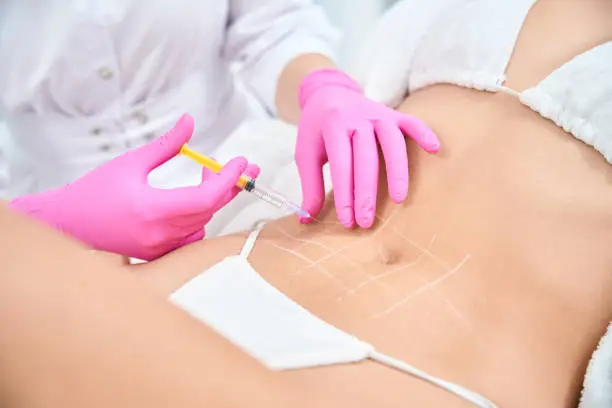
The abdomen and waist can be affected by several factors, including localized fat, overall body composition, and loose skin. Injectable products marketed for fat reduction are not automatically approved or proven safe for these areas.
Patients should ask about the specific product's evidence and authorization for the intended location. For larger fat deposits or more substantial contouring goals, another treatment may be more suitable.
Thighs and Upper Arms
Fat distribution in the thighs and upper arms varies considerably. Skin laxity can also influence the appearance of these areas, particularly after weight changes. Even when localized fat is present, injections may not address loose skin or provide a substantial change in contour.
A professional evaluation can help establish whether the treatment is appropriate and what degree of improvement may realistically be expected.
How Skin and Fat Work Together to Influence Results
Skin elasticity and fat distribution should be evaluated together. Reducing localized fat changes the volume beneath the skin, while the skin's ability to adapt influences the final contour. When a suitable treatment successfully reduces a small fat deposit and the skin adapts well, the area may appear more defined.
However, if the skin is loose or the fat deposit is extensive, the result may be less noticeable or may leave uneven contours. This does not necessarily mean that the treatment was performed incorrectly; it may reflect the limitations of the procedure and the person's anatomy.
For this reason, the goal should be a realistic improvement rather than a guaranteed transformation. A clinician should explain whether the treatment is likely to address the actual cause of the concern.
Safety Considerations Before Treatment
Fat-melting injections can cause swelling, bruising, redness, tenderness, and temporary changes in sensation. Depending on the product and injection site, more serious complications may include infection, uneven contours, skin injury, persistent lumps, or damage to nearby nerves and other structures.
Different formulations have different safety profiles, and a product suitable for one area is not automatically suitable for another. Patients should disclose relevant medical conditions, medications, allergies, and previous cosmetic treatments during the consultation.
Choosing a qualified medical professional and confirming that the product is appropriate for the intended area are essential steps. Patients should be cautious of claims promising identical results for every skin type or fat distribution pattern.
Book a Consultation at Royal Clinic Saudi
People considering Fat melting injections in Riyadh can contact Royal Clinic Saudi to discuss their body-contouring goals and learn about suitable options. A qualified clinician can evaluate skin elasticity, fat distribution, medical history, and the intended treatment area before explaining the potential benefits and limitations. This personalized approach helps patients understand whether injectable fat reduction is appropriate or whether another treatment may better meet their needs.
FAQs:
1. Does skin elasticity affect fat melting injection results?
Yes. Skin with good elasticity may adapt more readily to changes in underlying volume, while loose skin may remain noticeable after fat reduction. Individual outcomes still vary.
2. Can fat melting injections treat every area of the body?
No. Suitability depends on the specific product, its evidence, and its authorization for the intended treatment area. Approval for one area does not automatically apply to others.
3. Does the amount of fat determine how well injections work?
The amount and location of fat can influence treatment suitability, but they do not predict results on their own. Skin condition, anatomy, and the product used also matter.
4. How can I find out whether I am a suitable candidate?
A consultation with a qualified clinician can help determine whether the concern is caused by localized fat, loose skin, or another factor. The clinician can then explain appropriate options, risks, and realistic expectations.
fat dissolving injections near me fat melting injections Fat Melting Injections in Riyadh

Photos


Share this page with your family and friends.